
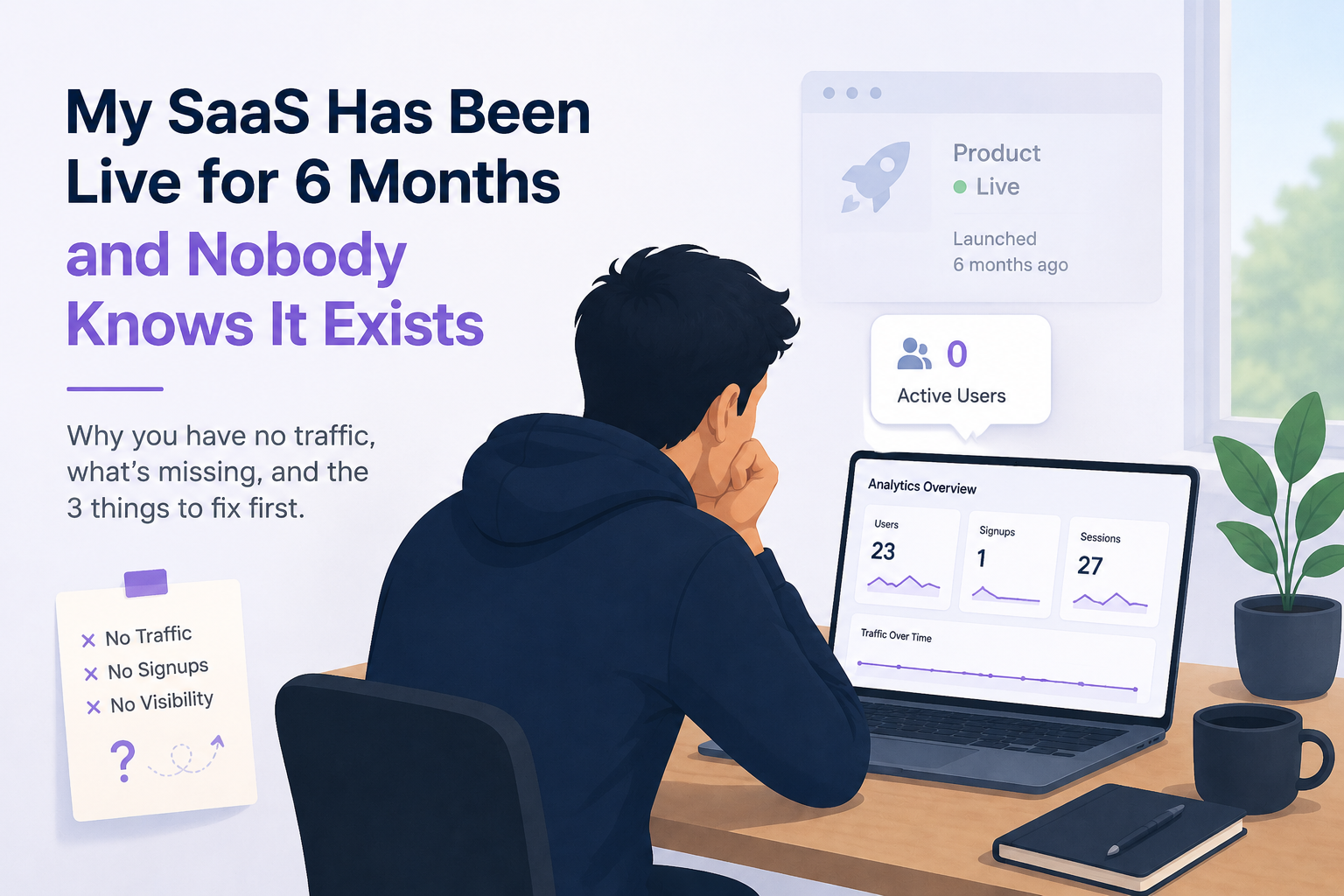
You spent months building the thing. You fixed the bugs. You wrote the onboarding flow. You set up billing. You launched.
And then... nothing.
A few visitors from the ProductHunt post that fizzled out. Maybe a couple of signups from people you know personally. A lot of days where the visitor counter reads single digits.
If this is where you are right now, you are not alone. This is one of the most common situations in early SaaS. A working product with almost no visibility. And the frustrating part is that the product actually solves a real problem. It just has no audience yet.
The reason is almost always that nobody built a way for people to find it.
You Did Not Fail to Build. You Failed to Be Findable.
Most technical founders spend ninety percent of their time on the product and almost none on distribution.
That is not a mistake. It is simply where most founders spend their time and energy. Building feels familiar. There is a feedback loop. You write code, something works or it does not. Marketing does not work like that. It feels slow, vague, and hard to measure. So founders put it off until the product feels ready enough.
But here is the problem. Search engines do not index products that have no content around them. Communities do not talk about tools they have never heard of. Potential users cannot find a product that has no presence in the places they already spend time.
A SaaS product with no content, no presence, and no community mentions is invisible. Not because it is bad. Because there is nothing pointing to it.
Being findable is a separate job from being built. Most founders learn this about six months after launch.
The Real Reason No One Visits Your SaaS After Launch
There are usually three things missing when a SaaS product has no traffic after launch.
No search presence. If you have no blog, no content, and no pages targeting the words your potential users are searching for, Google has nothing to rank. You might have a homepage. But a homepage with five sentences and a signup form does not give Google enough to work with. Search engines reward content that answers specific questions. If you are not answering any questions, you are not appearing in any searches.
No community presence. Your potential users are already somewhere. They are in Slack groups, Reddit threads, LinkedIn discussions, Indie Hackers posts, Hacker News comments. If your product name has never appeared in any of those places, those people have never had a reason to look you up. Community presence does not mean spamming links. It means being in conversations where your product is relevant.
No word of mouth system. Your first few users might love the product. But if you have never asked them to share it, referred to it, or talked about it publicly, that love stays private. Word of mouth does not happen automatically. It needs a small nudge and a reason.
What Actually Drives Early Organic Traffic for a New Product
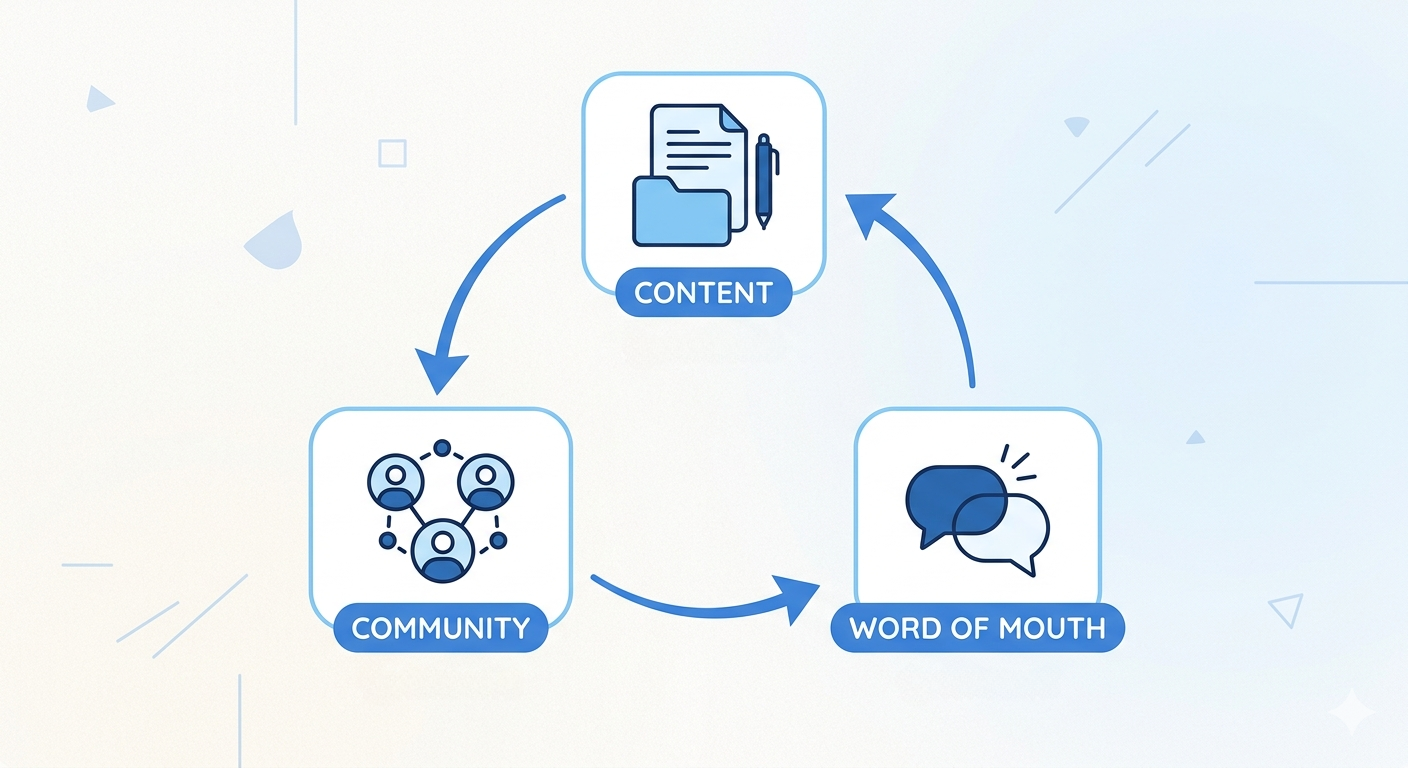
Organic traffic is not mysterious. It comes from a small number of sources, especially at the early stage.
Search content. Blog posts and resource pages that answer the exact questions your target users are searching for. Not generic marketing posts. Specific answers to specific problems. If your SaaS helps freelancers track client payments, a post titled "how to invoice clients as a freelancer" brings in exactly the right people. Over time, those posts compound. A post you write today can bring in visitors for years.
Community participation. Answering questions on Reddit, Indie Hackers, Hacker News, or relevant Slack communities without pitching builds visibility in the places your users already are. When you give a genuinely useful answer and your profile links to your product, curious people click. This is slow but it works and it costs nothing.
Build in public. Sharing your progress openly, what you are building, what is working, what is not, builds an audience of people who are interested in following the journey. Some of them become users. Many of them share your posts. This is how several early-stage SaaS products have gone from zero to thousands of users without spending on ads.
Why "Build It and They Will Come" Is the Most Expensive Belief in SaaS
It is easy to understand why founders believe this. You spent months building something real. It solves a real problem. Surely people who have that problem will find it.
But the internet does not work that way.
There are thousands of SaaS products that solve real problems and have almost no users. Not because the products are bad. Because nobody built a distribution path alongside the product.
Discovery does not happen automatically. Search engines do not spontaneously rank new websites. Communities do not organically discuss products they have never encountered. People do not share tools they have never tried.
Every user you have right now found you through some specific path. Someone shared a link. You posted somewhere. They searched for something and your page appeared. That path was not accidental. It was created, even if unintentionally.
The Three Channels Worth Your Attention Before You Try Everything at Once
The worst thing you can do right now is try six channels at once. You will do all of them poorly, burn out, and conclude that marketing does not work.
Pick one channel. Go deep. Get results. Then add a second.
Here are the three that make the most sense for an early-stage SaaS with no marketing team.
SEO content. Write posts that answer the exact questions your target users search for. Not about your product. About their problem. If your product helps small teams manage approvals, write about approval workflows, how teams handle sign-off processes, what goes wrong when nothing is documented. The people searching for those questions are your users. Some of them will find you, read the post, and check out what you built.
One community. Find the single online community where your target user is most active. Show up consistently. Answer questions. Be genuinely helpful. Do not promote your product unless someone directly asks. Over weeks and months, people in that community will know your name and what you are building.
Direct outreach. Find ten people who match your ICP exactly. Send them a short, honest message explaining what you built and asking if they would try it. Not a sales pitch. A genuine ask for feedback. Some will say no. A few will try it. One or two might become your most vocal early advocates.
Three things. Pick one to start. Do it properly.
What a 90-Day Visibility Plan Looks Like When You Are Starting From Zero
You do not need a complicated plan. You need a consistent one.
Here is what ninety days of focused effort looks like for a solo SaaS founder starting from scratch.
Month one: foundations. Write two blog posts that target search queries your ICP actually uses. Set up Google Search Console so you can see what searches are bringing people to your site. Pick one community and spend thirty minutes a day reading and occasionally replying. Do not promote anything yet. Just be present and useful.
Month two: content and outreach. Publish two more blog posts. Start doing direct outreach, ten people per week who match your ICP. Not a pitch. A genuine message asking if they experience the problem your product solves. Some conversations will lead to demos. Some demos will lead to users.
Month three: build in public. Start sharing what you are learning. What is working. What is not. What you are building next. Do this on LinkedIn, Twitter, or wherever your ICP spends time. The goal is not viral posts. The goal is to be recognizable to the people you are trying to reach.
By the end of month three you will have real data. You will know which posts are getting traffic, which communities are sending visitors, and which outreach messages get replies. That data tells you where to focus next.
How to Know When Something Is Working vs When to Stop Wasting Time on It
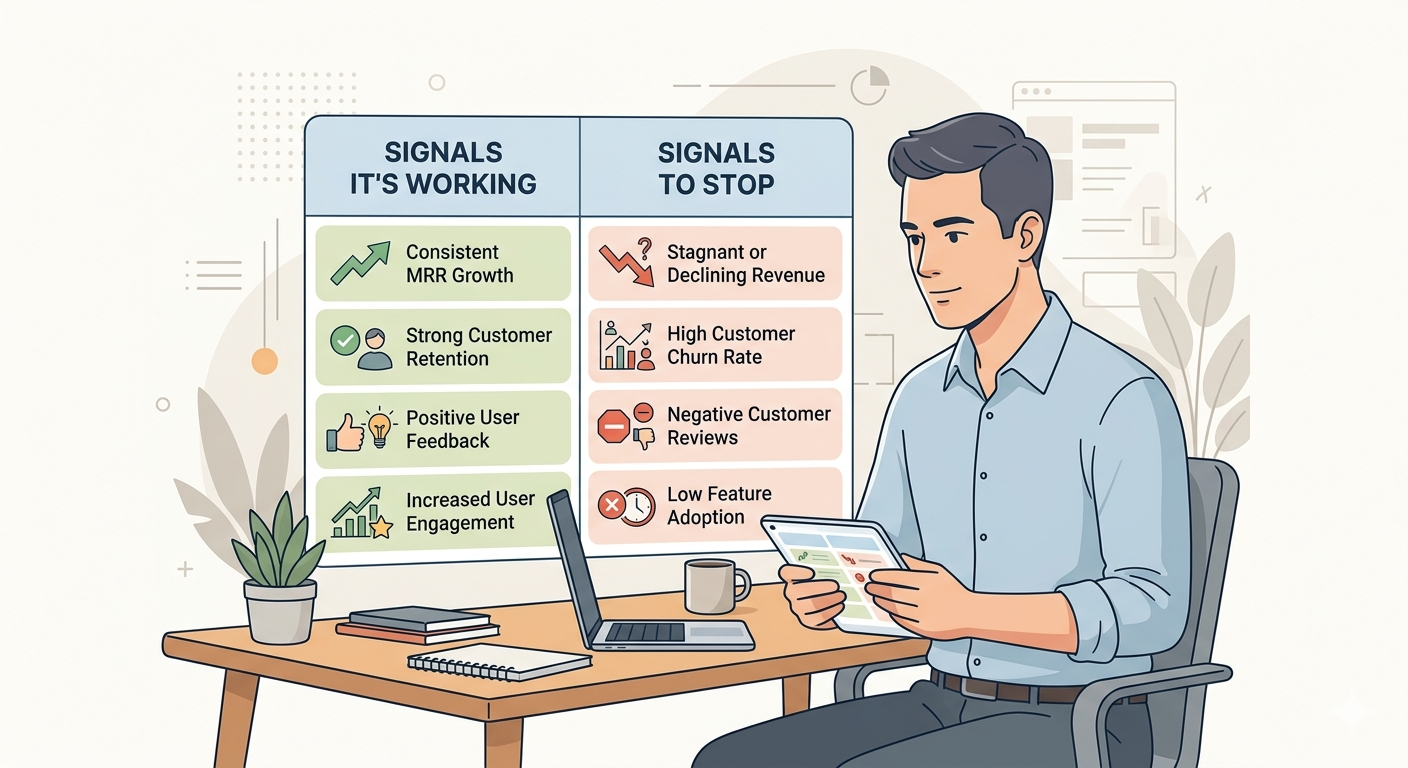
A channel is working if: visitors from it are spending real time on your site, signing up at any rate, or converting to trial users even at a low rate. A blog post is working if it is climbing in search rankings or bringing in consistent visitors month over month. A community is working if people are engaging with your replies and clicking through to your profile.
A channel is not working if: after six to eight weeks of consistent effort, you are seeing zero movement. No new visitors. No replies. No engagement. That is the signal to stop, not to try harder in the same direction.
The biggest time trap for early founders is continuing to do something that is not working because they already invested time in it. Cut it. Move the time to something else.
Many founders know marketing matters. The challenge is knowing where to start.
Researching customers, identifying the right channels, understanding competitor positioning, creating content, and building a repeatable workflow can take hours every week.
This is where many founders look for systems that help them organize the work before anything goes live.
Instead of guessing, they need research, strategy, content ideas, and creative assets in one place while still reviewing and deciding what happens next.
FAQ SECTION
How long does it take for a new SaaS to get organic traffic?
SEO content typically takes three to six months to start appearing in search results consistently. That timeline shortens if you are targeting low-competition, specific keywords rather than broad generic terms. Community presence and direct outreach can produce results faster, sometimes within weeks, but they require consistent effort.
What is the fastest way to get my SaaS in front of people?
Direct outreach is the fastest channel available to an early-stage founder. Ten to twenty targeted messages per week to people who match your ICP exactly will produce results faster than any content or SEO strategy. It does not scale, but it gets you early users quickly and gives you feedback about whether your positioning is working.
Should I start with SEO or social media if I have no traffic?
Start with SEO if your ICP searches for their problem on Google. Start with social or community if your ICP spends time in specific online communities. The right answer depends entirely on where your target user already is. Pick the channel that puts you closest to them, not the channel you are most comfortable with.
Do I need a blog before running ads?
You do not need a blog before running ads, but you do need a landing page that clearly explains what your product does and who it is for. Running ads to a generic homepage almost always wastes budget. If you are going to invest in paid traffic, invest thirty minutes first in making sure the page that traffic lands on is specific, clear, and focused on one action.
Why does my SaaS have zero signups after launch?
Usually one of three reasons. Either nobody knows the product exists yet because there is no content, community presence, or distribution strategy. Or people are finding the product but the homepage messaging is not clear enough to convert them. Or the product is attracting the wrong audience. Check analytics to see which situation applies before fixing anything.