
If you've ever wondered why some visitors buy right away while others disappear and never come back, the answer usually comes down to one thing: your funnel, or the lack of one.
A lot of founders hear "marketing funnel" and picture something complicated, full of jargon and diagrams. It's actually a simple idea. It just explains something you've probably already noticed happening naturally.
What a Marketing Funnel Actually Is
A marketing funnel is just the path someone takes from not knowing your product exists to becoming a paying customer.
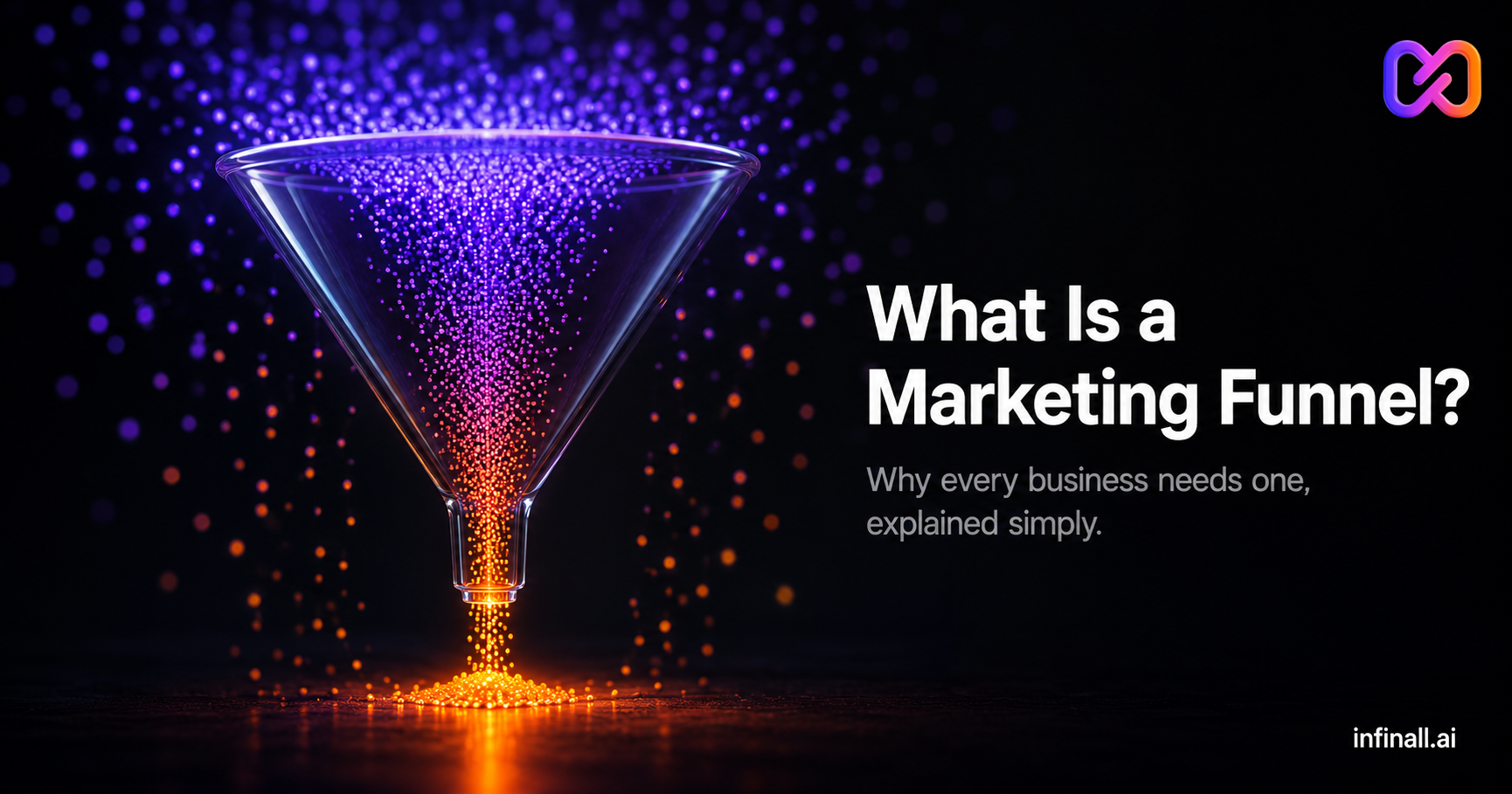
Picture a real funnel, wide at the top, narrow at the bottom. Lots of people enter at the top by discovering your product somehow. Fewer of them move to the middle, where they start considering it seriously. Even fewer reach the bottom, where they actually buy.
The name isn't fancy marketing talk. It's describing something real: at every stage, some people drop off, and only a smaller group makes it to the next one.
Why This Matters More Than It Sounds
Without understanding the funnel, founders often make one common mistake: they treat every visitor the same way, showing everyone the same message regardless of where they actually are in their decision.
Someone who just discovered your product for the first time isn't ready to see a pricing page. Someone who's already compared five tools and is close to deciding doesn't need a basic explainer about what your product does. Mixing these up wastes both moments.
Understanding the funnel means matching the right message to the right stage, instead of guessing.
The Three Basic Stages, Explained Simply
Most funnels break down into three simple stages, even if different frameworks give them fancier names.
Awareness: The person just found out a problem like theirs exists, or just found out your product exists. They're not ready to buy. They're ready to learn.
Consideration: The person knows their problem clearly and is now comparing possible solutions, including yours and a few competitors.
Decision: The person is close to choosing. They want proof, clarity on pricing, and reassurance that they're making the right call.
Every piece of content, every email, every page on your site fits somewhere in this path, whether you planned it that way or not.
Why Every Business Actually Needs One
Some founders think funnels are only for big companies with dedicated marketing teams. That's backwards. Smaller SaaS companies need this thinking more, not less, because they usually don't have the budget to waste on the wrong message at the wrong stage.
Without a funnel in mind, it's easy to spend all your energy at the top, awareness content, blog posts, social media, while completely ignoring the middle and bottom stages where people actually decide to buy. Traffic without a path to conversion just becomes a vanity number.
A Simple Way to Map Your Own Funnel
You don't need software or a complicated diagram to start. Grab a blank page and answer three questions:
How does someone first hear about my product? (This is your awareness stage.)
What do they need to see or read before they trust it enough to consider it seriously? (This is your consideration stage.)
What's stopping someone who's already interested from actually signing up? (This is your decision stage.)
Your answers point directly to what content or pages you're missing. If you can't answer question two clearly, that's usually your first gap to fix.
Common Funnel Mistakes Founders Make
The most common mistake is building only for the top of the funnel. A blog with great content but no clear next step leaves interested readers with nowhere to go.
Another common mistake: skipping the middle entirely. Founders build awareness content and a pricing page, but nothing in between to help someone actually compare and decide. That gap is exactly where potential customers quietly disappear.
Your Funnel Should Match Your Actual Customer
A generic funnel copied from a template rarely fits your specific product. Your ICP, the way they research, how long they take to decide, all of that shapes what your funnel should actually look like.
If you haven't clearly defined who you're building this funnel for yet, that's the real starting point before mapping stages. Infinall's guide on finding your ideal customer when your product fits everyone is a useful place to start.
FAQs
What is a marketing funnel in simple terms?
It's the path someone takes from first hearing about your product to becoming a paying customer, usually moving through awareness, consideration, and decision stages.
Why does a small SaaS business need a marketing funnel?
Because without one, you risk showing the wrong message at the wrong stage, wasting limited time and budget on visitors who aren't ready for what you're showing them.
What are the main stages of a marketing funnel?
Most funnels break down into awareness, consideration, and decision, though some frameworks add more detailed stages within these.
How do I know if my funnel has a gap?
Look at where people drop off. Traffic with no signups usually points to a gap in the middle, consideration stage.
Is a marketing funnel the same as a sales funnel?
They're closely related. A marketing funnel usually covers the full journey, while a sales funnel often refers more narrowly to the stages closer to purchase.
Do I need special software to build a funnel?
No. A funnel is a way of thinking about your customer's journey. You can map it out on paper before building anything technical.
What's the most common funnel mistake founders make?
Focusing only on the top of the funnel, awareness content, while leaving nothing in the middle to help interested visitors actually decide.